What Korean-Standard Design Means for Vietnamese Sites
If you run a business in Vietnam, you may have asked: "Why doesn't our website look as polished as those of Korean companies?" Same budget, similar content, yet the final impression is noticeably different. This article clarifies what "Korean-standard design" actually refers to, and what difference it makes for websites in the Vietnamese market. Yeowubie is one of a small number of agencies that implement Korean design and technology standards directly in Vietnam, and we speak from projects we have built ourselves.
What the Korean design standard is
The Korean design standard is not about flashiness but about tidy consistency and clarity of information hierarchy. Line and letter spacing, the rhythm of white space, color contrast, and mobile-first responsiveness all move under one set of rules. A readable structure comes before a striking look.
To put it more fully, the "standard" common on Korean websites does not mean a particular trend. It uses the idea of design tokens: values for color, spacing, typeface, and corner radius are defined in advance, and every page references the same set. As a result, a single button or card does not look different on every page. From the very first screen, users unconsciously receive the signal that "this site is being managed."
Another core element is information hierarchy. What to show first, which sentence to enlarge, where to place the call-to-action button, are decided by principle rather than by gut feeling. A well-built Korean corporate site looks calm because it uses few colors and a clear hierarchy, not because it adds expensive effects.
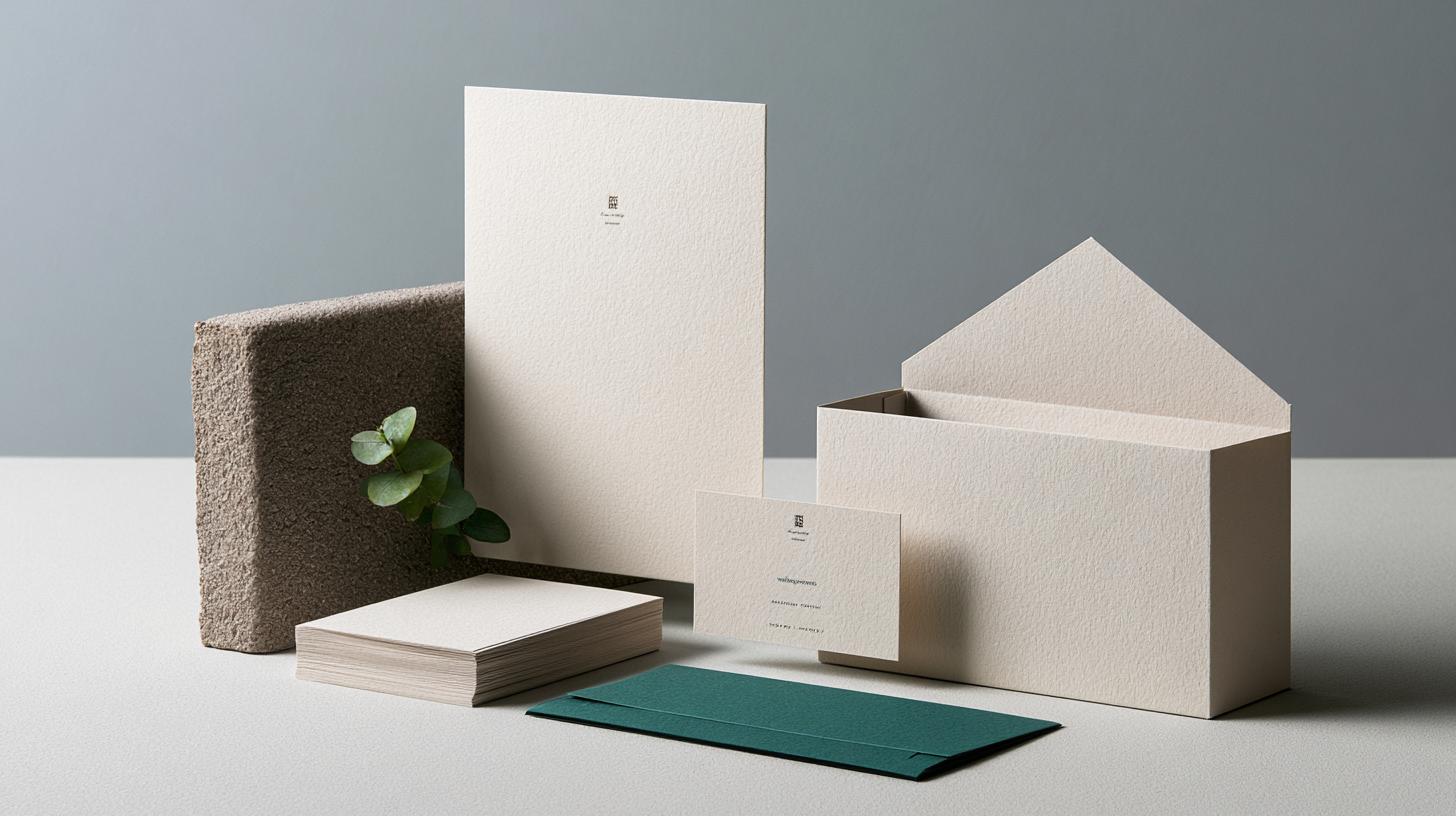
Yeowubie's visual language rests on this same foundation. We use a warm ink neutral as the base and apply a petrol (deep teal) accent with restraint. We avoid the familiar violet-indigo gradients and stacks of meaningless glass cards. Instead of cramming everything into the center with a symmetrical layout, we guide the eye asymmetrically, the way magazine editing does. A tidy impression without noise, that is what we mean by Korean standard.
How it differs from typical Vietnamese web
Many Vietnamese sites tend to pack as much content as possible into a single screen. Multiple banners rotate, colors abound, and font sizes are uneven. The biggest difference from the Korean standard lies in whether there is "the restraint to remove" and "consistent rules."
This is not a matter of Vietnamese designers' skill. It is closer to a matter of market habit and how work is commissioned. In many cases each page is drawn separately, and an element is added every time a client requests one. As a result, it is hard for a rule running through the whole site to take hold. Breaking layouts on mobile, or buttons of the same function looking different on each page, are common.
The difference also shows in speed. The Korean standard builds image optimization, font-loading strategy, and removal of unnecessary scripts into the design from the start. Even an extra one to two seconds of initial load increases visitor drop-off. The heavy sliders and autoplay videos often seen in Vietnam make a flashy first impression, but on mobile data they work against you.
The hierarchy of copy also differs. Korean sites make the viewer focus on one message per screen. What to read and what to press is clear. Conversely, if you emphasize everything at once, in the end nothing is emphasized. The first thing we do when working with Vietnamese clients is to decide together "what can be removed."
Impact on conversion and trust
Design is not only a matter of aesthetics but also of business metrics. A tidy first impression builds trust, while clear information hierarchy and fast loading raise the rate at which visitors move to action, that is, the conversion rate. Looking good in the right way is the same as working well.
Let us start with trust. A first-time visitor cannot know the company's substance, so they convert the site's level of finish into the company's credibility. A site with broken text or a skewed mobile layout creates the doubt "is this company alright?" no matter how good the product is. Especially for companies with a Korean head office, or Vietnamese companies targeting the Korean market, falling short of the finish Korean users are used to causes a large loss of trust.
Conversion is more direct. Small decisions such as whether the key button is visible at a glance, whether the inquiry form is not too long, and whether the size is easy to tap with a finger on mobile, add up to the result. Compared with flashy animation, "not letting users hesitate about the next step" matters far more for conversion.
Yeowubie's way of working consciously aims at this point. We do not stop once the design is set; we watch where users pause and refine the copy and layout. As a Korea-Vietnam partner that builds and operates with AI, our cycle of producing page variations to compare and improve is short. That means we keep to the design standard while adjusting based on real numbers.
A case study (anonymous)
Let us introduce one real case anonymously. Rather than the result figures themselves, we want to show how the same principle was applied.
There was a campaign landing page project for a large Vietnamese bank. The existing material was rich in information but held too many things at once on a single screen, leaving visitors unsure of what to look at first. We compressed the message to a single line, reduced the colors so the core action button naturally caught the eye, and reset the hierarchy. We removed autoplay elements to lighten mobile loading, and used only a petrol accent with restraint over a warm ink neutral tone.
The point was not "flashier in the Korean way" but "tidier in the Korean way." We did not add elements but removed them, and made the path of the eye clear. A level of finish the client could show their Korean head office or partners without embarrassment, while Vietnamese users still use the screen smoothly on mobile. Satisfying both at once is the practical result we define as the Korean standard.
This was possible because from the start we set design tokens and information hierarchy as rules. Rather than drawing pages one by one, we first build a rule running through the whole, then compose screens within it.
Frequently asked points
Finally, here is a short summary of points Vietnamese clients often ask.
"Is the Korean standard more expensive?" Because the core of design is the tidiness of rules, not the quantity of effects, setting tokens and hierarchy from the start actually reduces revision costs. This article does not discuss specific figures, but long-term maintenance costs are often lower than the approach of piling on expensive effects.
"Do we have to replace the entire existing site?" Not necessarily. A staged approach is possible: first unify the rules for color, typeface, and spacing, then reset the hierarchy starting from the most important page.
"Can Korean, English, and Vietnamese multilingual use the same standard?" Yes. In fact, on a design-token basis, the layout does not break even when text length differs by language.
"Is Yeowubie a Korean company or a Vietnamese one?" Yeowubie is a Korea-Vietnam partner that implements Korean design and technology standards in Vietnam. Because we build and operate with AI, we deliver fast, consistent results even with a small team.
If you are curious what Korean-standard design would change for your site, start a light conversation at yeowubie.com.