A Double Gate: AI Code Review Plus Human Inspection
Why AI review alone does not hold quality
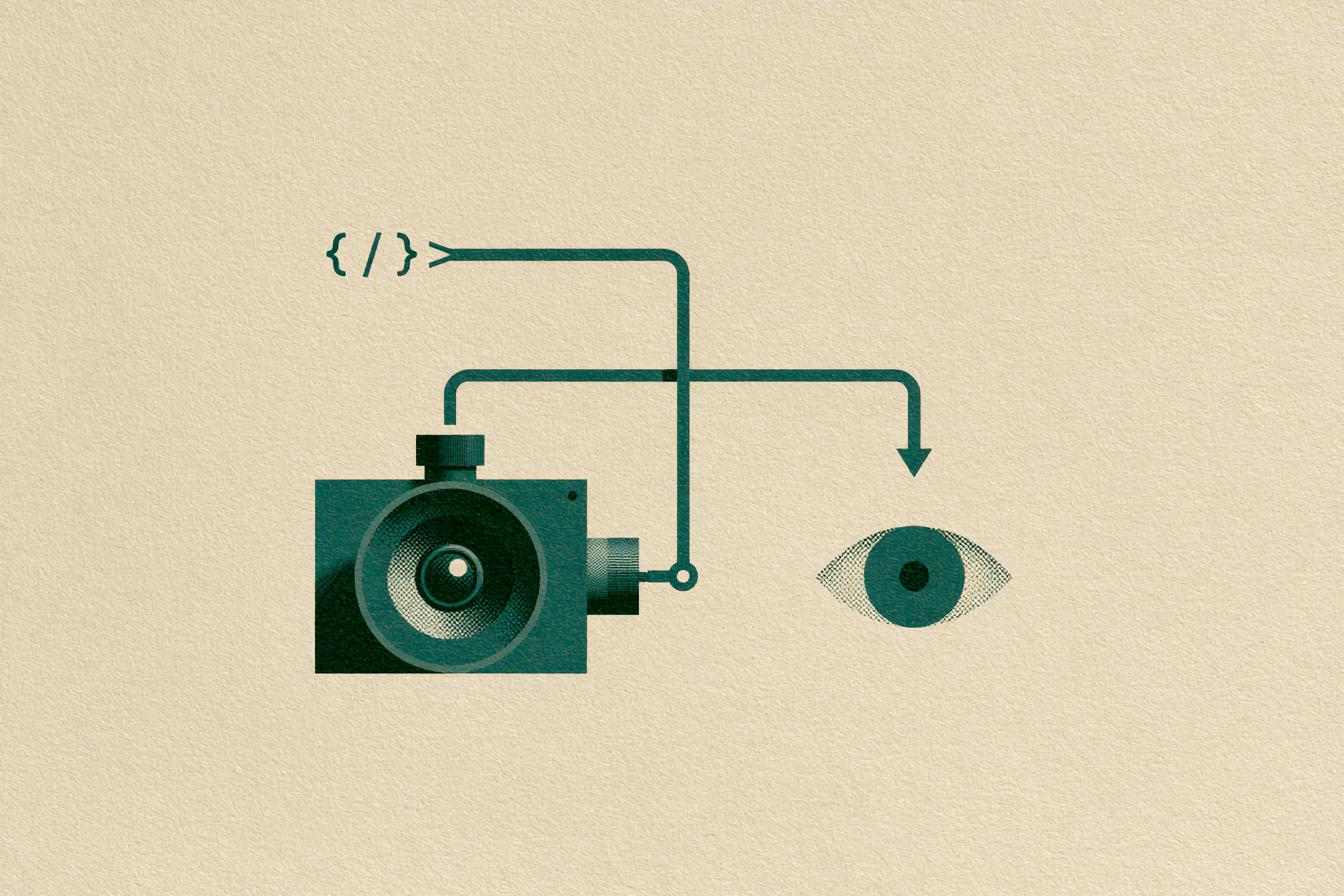
AI code review is good at catching repetitive defects, convention breaks, and common technical risks, but it does not understand your business goals. Code can run correctly and look clean while still being wrong about the actual requirement. That is why real quality needs a second layer of human judgment about context.
When a company outsources web or mobile app development, the most common question is rarely "does this team know how to use AI." It is "how do I know the code they deliver is actually good." That is the right question. Today's AI tools write code very quickly, and that speed creates a new risk: code volume grows faster than humans can review it. Without a clear control mechanism, high productivity simply means defects are produced faster too.
Some teams address this by adding an automated review bot and calling it done. It helps, but it is not enough. AI review excels at work with clear patterns: unused variables, overly long functions, resource leaks, code shapes that lead to security flaws, missing error handling. It is consistent and tireless, and it does not skip something because it got sleepy at the end of the day. But AI does not know that your billing rule has a special exception for enterprise customers, or that a seemingly useless data field actually feeds a legal report. That lives in business context, and context is the thing AI does not have on its own.
The practical approach is to separate defects into two kinds. The first is patterned defects, which machines catch better than people. The second is defects of intent and context, which people catch better than machines. A serious quality process does not pick one. It chains both into two gates in series. Code must pass the AI gate first, and only then does it reach the human gate. Each gate owns the part it does best, and neither is allowed to replace the other.
The first gate: what AI code review actually filters out
The first AI gate runs automatically the moment code changes, before anyone spends time reading it. It scans the entire change, compares it against project conventions, and flags technical problems with a clear pattern. The purpose of this gate is to clear away the mechanical layer of defects so humans do not waste effort on them.
In practice the first gate usually focuses on a few groups of issues. On style and structure, it checks naming, function length, duplicated code, and overly complex sections that are hard to maintain. On robustness, it looks for unhandled error paths, null values that can cause crashes, loops that waste resources, and inefficient database queries. On security, it identifies familiar dangerous patterns such as feeding unvalidated data into a query, leaking sensitive information into logs, or depending on a library with a known published vulnerability.
The strength of this gate is consistency and scale. Even an excellent reviewer can miss a misspelled variable while reading a long change at the end of a day. A machine does not miss what falls inside its rule set, whether the change is large or small. Exactly when code volume rises because AI is writing it, a consistent automated checking gate becomes more necessary than ever.
But the limits must be stated honestly. AI review produces both false positives, flagging things that are actually fine, and misses, failing to see defects outside its patterns. If a team trusts the first gate absolutely, it will both waste time fixing unnecessary warnings and ship defects the machine cannot see. So the AI gate is never treated as the final verdict. It is an input filter: it cleans up the easy part and lifts the hard part to the right height for humans to handle. Its role is preparation, not conclusion.
The second gate: what human inspection is responsible for
The human gate evaluates what the machine cannot: whether the code does the job it is supposed to do, whether it matches the business requirement, and whether it causes unintended consequences elsewhere. The reviewer reads the change alongside the goal of the feature, weighs the AI gate's warnings against context, and then decides to pass it or send it back.
The core difference is that the reviewer works with intent, not just syntax. A function can be technically perfect while solving the wrong problem. A change can pass every automated check while breaking an implicit assumption in another module that only someone who knows the system would catch. A way of handling data can be technically correct while violating a customer's expectation about privacy. These judgments require understanding both the product and the user, which is why this step cannot be fully automated.
The reviewer also acts as a judge over the AI gate itself. When the first gate flags a problem, the reviewer decides whether it is a real risk that must be fixed, or a false positive that can be deliberately passed with a recorded reason. This judgment matters: it keeps the team from becoming a slave to the tool, blindly fixing everything the machine says just to turn the gate green. The goal is good code, not a clean dashboard.
For this step to carry real value, the reviewer needs enough time and enough context. A process that forces someone to approve thousands of lines in a few minutes produces a rubber stamp, not control. The sustainable way is to keep each change at a moderate size that can be read carefully, paired with a clear description of what the change is trying to achieve. Then the reviewer is not guessing intent but focusing on verifying it. In many teams the person who wrote the code and the reviewer are different people, to secure a genuinely independent view instead of self-review.
The workflow that joins the two gates: pass criteria and blocking rules
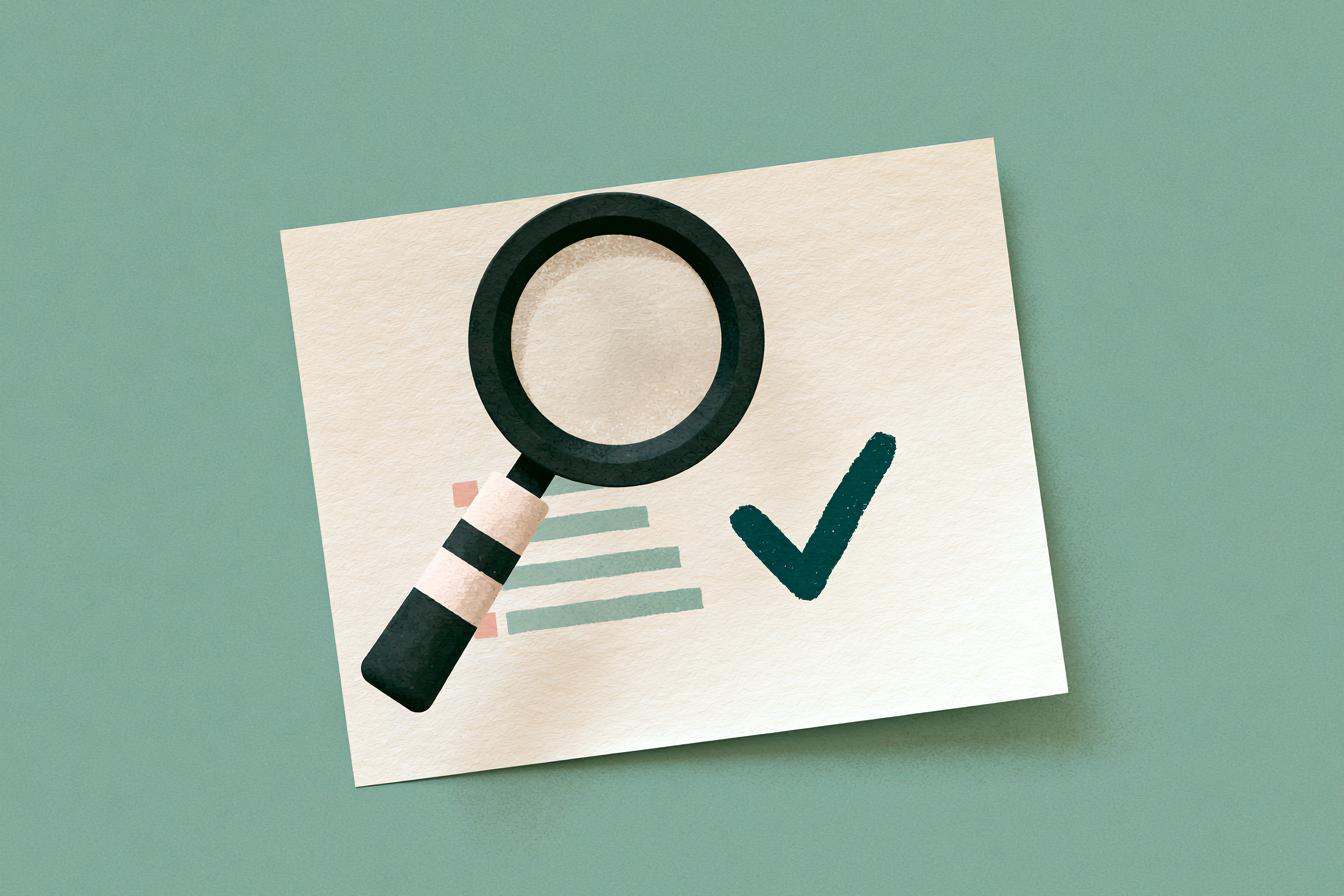
The two gates only work when joined by a clear workflow: code passes the AI gate first, the result travels to the reviewer alongside it, and only changes that clear both gates are merged. What decides quality is predefined pass criteria and blocking rules, not an improvised decision every single time.
A typical flow goes like this. A developer finishes a change and submits it. The AI gate runs immediately and produces a list of findings sorted by severity. Serious issues, such as a dangerous security pattern, are a hard block: the change cannot move forward until it is handled. Lighter issues come up as notes for the reviewer to consider. The reviewer then steps in, reads the change with the business context and the machine's notes, and reaches one of three conclusions: approve, request changes, or conditionally approve with a recorded reason. Only after the human gate agrees is the change merged into the main branch.
The crux is distinguishing hard blocks from soft warnings. If every finding blocks, the team is paralyzed and starts looking for workarounds. If nothing blocks, the gate becomes decoration. The balance is to reserve hard blocking for a narrow set of truly non-negotiable risks, usually around security and data loss, and leave everything else to the reviewer's judgment. This boundary should be written down and agreed in advance, so no one has to argue about it at exactly the moment a delivery is due.
A good process also acknowledges one important truth: the AI gate and the human gate need to learn from each other. When a reviewer keeps passing a certain kind of warning, that is a signal to adjust the first gate's rules. When a kind of defect keeps clearing both gates and is only found after it reaches production, that is a signal to add a new check. The double-gate system is not something you set up once and leave alone. It is a loop refined by the defects you actually encounter.
Beyond quality: the asset the double gate leaves for security and maintenance
Beyond catching defects, the double-gate system leaves a long-term asset: a traceable record of how each change was checked, who approved its passage, and why a given warning was accepted. This record is what makes a software product's security and maintenance durable over time, rather than dependent on one person's memory.
In terms of security, the double gate addresses a very real worry in outsourced development: how do you know the code you receive holds no hidden vulnerabilities. The AI gate scans known dangerous patterns consistently across the whole codebase, while the human gate evaluates context-dependent risks, such as whether an access permission is truly necessary or too broad. Neither layer is sufficient alone, but together they create a level of control that one side struggles to reach. Just as important, every decision leaves a trace, so when a security incident appears later, the team can trace back the relevant change instead of groping in the dark.
In terms of maintenance, the value accumulates over time. Software lives far longer than the moment it was written. Six months later, another developer, possibly not the original author, will need to fix or extend the same code. When each change comes with a clear record of what it did and why it was accepted, the person who arrives later understands the system faster and is less likely to break something by accident. This is the quiet difference between a codebase everyone is afraid to touch and one that can grow safely.
Finally, the double gate deserves an honest view. It does not make software perfect, and no process does. Some defects will still get through, because that is the nature of building software. What the double gate provides is a disciplined, repeatable way to control quality, one that does not depend on a single capable person happening to be sharp on the right day. For a company weighing a development partner, a more valuable question than "does this team use AI" is "how does this team control the quality of the software it delivers." A clearly defined double-gate process is one of the most concrete answers to that question.